Premium Paver Installation & Hardscaping in Katy, TX
Built From the Ground Up: Premium Paver Installation & Hardscaping
A hardscape is only as good as what’s underneath it, which is the part most homeowners never think about until something starts sinking. We build patios, driveways, and pool decks in Katy that look as good as they perform structurally, whether that’s a travertine pool deck, an interlocking driveway, or a stone patio built around a fireplace.
Katy’s clay soil moves with moisture, which is exactly what causes standard paver jobs to shift, sink, or develop drainage problems within a few years. We build a deep, commercial-grade sub-base and stabilize the soil underneath before a single paver goes down, so what you’re actually paying for is the engineering underneath the surface, not just the surface itself.
What We Build
We design each hardscape around how you’ll actually use the space and how it ties into your home’s architecture, not just where the pavers happen to fit. Here’s what that looks like across the projects we build most often in Katy:
- Custom Paver Patios: A patio is usually the anchor for everything else in the backyard, so we design ours to flow naturally from your back door into space for an outdoor kitchen, fireplace, or seating area. Natural stone or interlocking concrete, the patio gets built level and properly sloped from day one.
- Pool Deck Pavers: Travertine stays notably cooler underfoot than most materials, which matters around a Katy pool deck in summer. We prep the sub-surface carefully so the finish transitions cleanly around coping, skimmers, and drains, and holds up to pool chemicals and daily foot traffic.
- Driveways & Walkways: Poured concrete tends to crack and discolor under vehicle weight once Katy’s soil starts shifting. Interlocking pavers distribute that weight across the joints instead of concentrating stress in one slab, which is why they hold up better long-term and look sharper doing it.
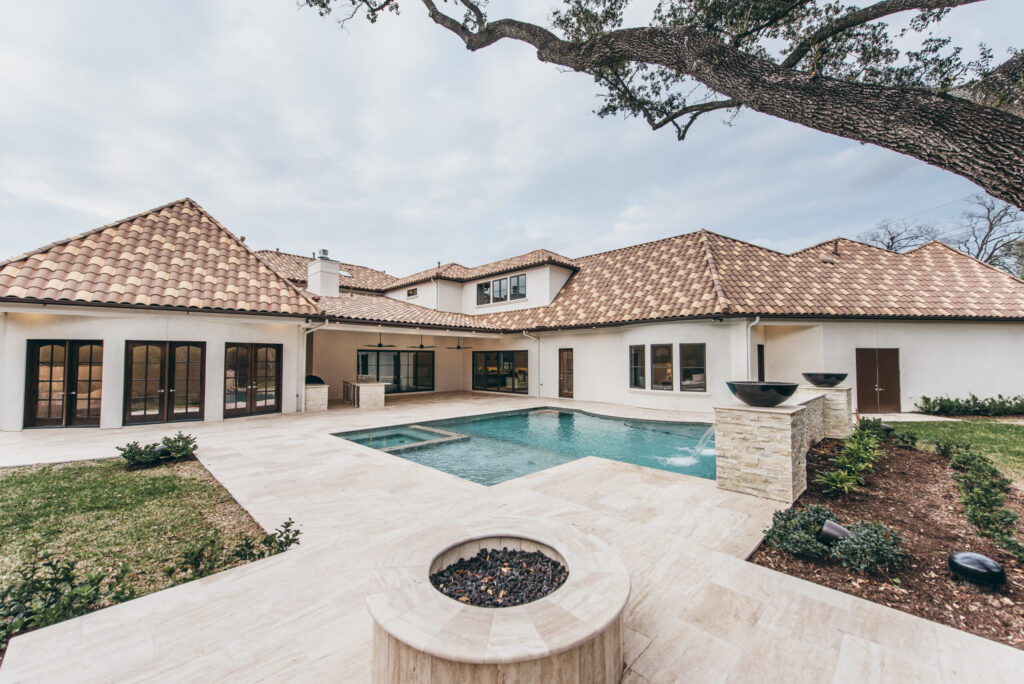
Travertine pavers laid in a classic brick pattern around this pool deck—a project from our Houston-area portfolio, shown here as an example of the finish quality we bring to Katy pool decks as well.
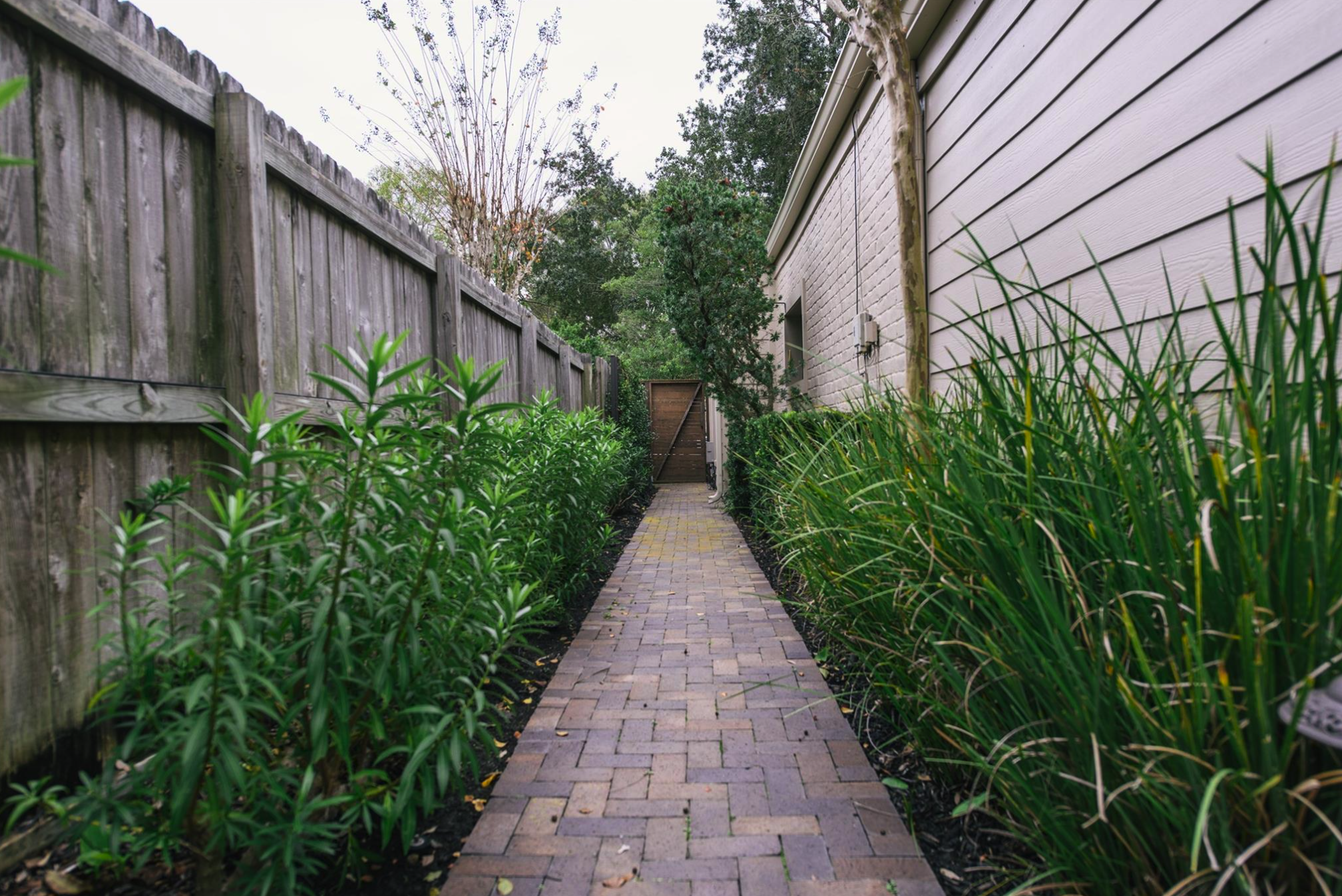
A herringbone pattern like this does double duty: it looks intentional and it locks together more securely than a straight running pattern would on a high-traffic path.
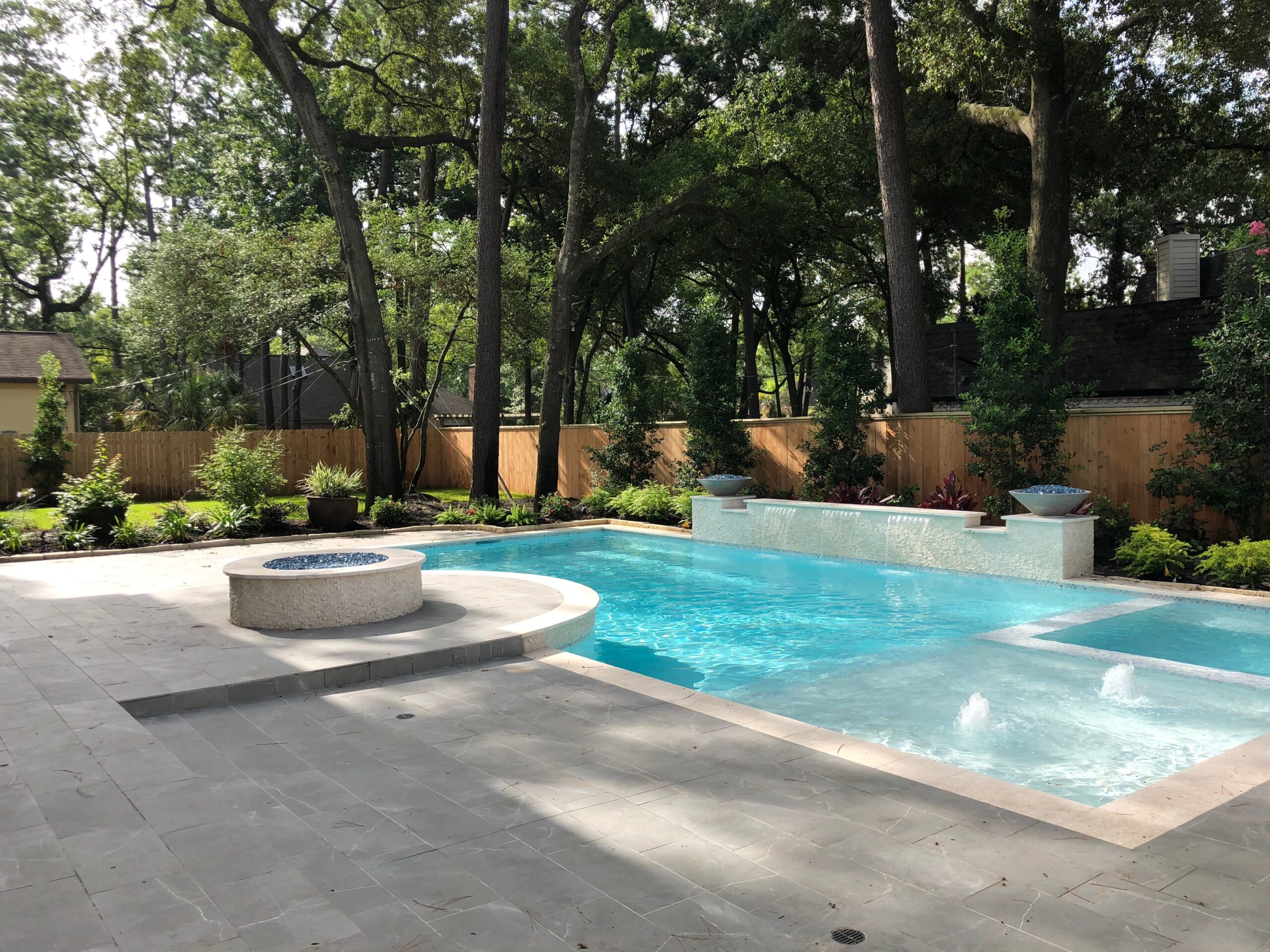
This medium grey paver overlay gives the visual weight of full-depth stone while integrating cleanly around the pool features and fire pit.
Choosing the Right Paver Material
Material choice affects both the look and how the surface performs over time, so it’s worth getting right. We source stone and engineered concrete pavers from manufacturers we trust and walk you through the tradeoffs in texture, tone, and performance before you commit to one.
- Natural Travertine: Quarried stone with natural color variation that reads as genuinely upscale. It’s also practical for this climate—travertine stays cooler underfoot than most materials and has natural slip resistance, which matters around a pool.
- Belgard Concrete Pavers: For clean modern lines and higher load capacity, we install Belgard’s engineered interlocking system. The UV-stable pigments hold their color instead of fading out after a couple of Texas summers, which is a common failure point with cheaper concrete pavers.
- Porcelain Pavers: Kiln-fired at high temperatures, these slabs are non-porous enough to resist staining, scratching, and mildew without ever needing sealed. They come in large-format sizes and realistic stone or wood-grain finishes, with a skid-resistant texture built in for pool surrounds.
- Tumbled Brick: Genuine clay brick with a tumbled finish, for a courtyard look that reads as established rather than newly built. Because the color runs through the brick instead of sitting on the surface, it doesn’t fade the way tinted concrete does over the years.
- Flagstone, Slate & Quartzite: For a more organic, irregular look, we hand-cut and lay flagstone, slate, or dense quartzite into custom layouts that read as part of the landscape rather than an obvious add-on.
How We Actually Build It
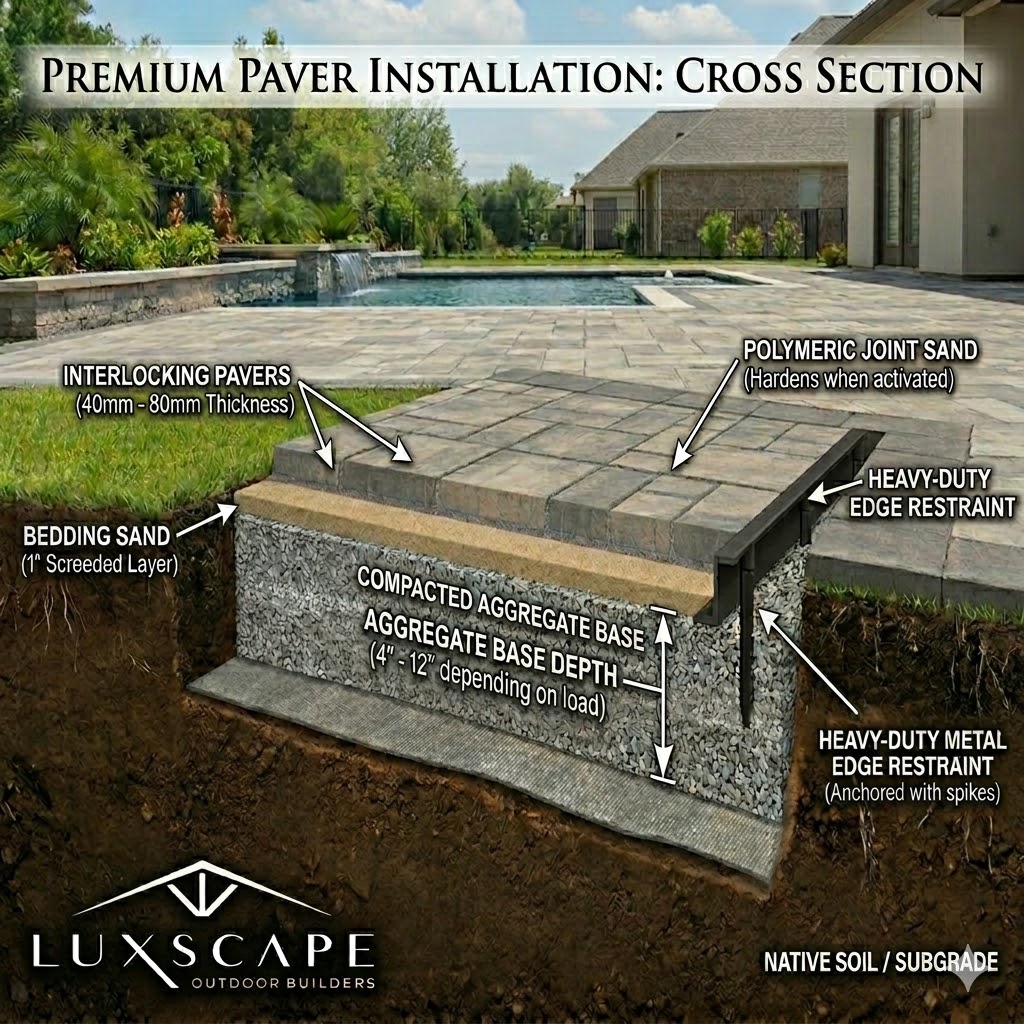
A paver installation is only as good as what’s underneath it. Cutting corners here—laying stone over a thin bed of sand, skipping soil prep—is exactly how jobs end up sinking and uneven within a couple of years. We build in layers specifically designed to handle how Katy’s soil moves.
- Excavation & Soil Stabilization: We excavate deep enough to remove unstable topsoil and root systems, then compact the exposed clay sub-grade. On driveways and larger patios, we add geotextile fabric to keep that native clay from migrating into the clean stone base above it.
- Aggregate Sub-Base: Crushed limestone goes down in 3-inch lifts, compacted with a vibratory plate between each layer rather than dumped and compacted all at once. That’s what gives you uniform density instead of soft spots, while still letting water drain through underneath.
- Sand Bedding & Edge Restraints: A one-inch layer of screeded concrete sand sets the final slope for drainage. Edge restraints anchor into the sub-base around the full perimeter, which is what keeps the pavers from creeping outward over years of traffic.
- Joint Sand & Final Compaction: After the pattern is laid, we compact the whole surface to lock the pavers into the bedding sand, then sweep in polymeric sand and activate it with water. That creates a rubberized joint that flexes with ground movement instead of washing out in heavy rain.
- 1-2-10 Warranty: Every hardscape project is backed by our 1-2-10 warranty, which covers structural defects, shifting, and workmanship issues. We can offer that coverage specifically because of the base depths and prep work described above, not despite them.
Paver Installation FAQs
Here are the questions we hear most often about materials, timelines, and how the installation actually holds up over time.
How long does a typical custom paver patio or driveway installation take?
It depends on square footage, layout complexity, and material, but a typical patio or pool deck runs 3 to 7 consecutive days, while a full driveway usually takes 5 to 10. We keep the jobsite clean and organized the whole way through, from excavation to the final walkthrough.
Will my custom pavers shift, sink, or become uneven over time?
Katy’s clay soil expands and contracts with moisture, which is exactly what causes cheap paver jobs to sink or go uneven within a few years. We avoid that by excavating deep, compacting the sub-grade properly, and building a multi-layered limestone base wrapped in stabilization fabric. Whatever minor movement does happen gets distributed across the flexible joints instead of concentrating in one spot.
What is the benefit of natural travertine over traditional concrete pavers?
Beyond the aesthetic appeal, travertine’s biggest practical advantage is staying cool underfoot, which matters a lot around a pool deck in a Texas summer. Concrete pavers like Belgard trade that particular benefit for higher load capacity, which is why we tend to recommend them for driveways instead.
Do premium porcelain pavers require sealing or heavy maintenance?
No. Porcelain is kiln-fired dense enough that moisture, oil, and pool chemicals don’t really penetrate it, so staining and mildew aren’t the issue they’d be with a more porous material. Maintenance is mostly a garden hose rinse or a light pressure wash to knock off dust and pollen.
How does the Luxscape 1-2-10 Warranty protect my hardscape investment?
It’s tiered coverage against structural shifting, workmanship issues, and material defects, and we can stand behind it specifically because of the base depths we build to in the first place. We walk through the exact coverage details during your design consultation, so you know what’s protected before we start.