Premium Katy Concrete Resurfacing and Decorative Overlays
Give Your Existing Concrete a Second Life in Katy
A faded, cracked driveway or a flat gray patio slab doesn’t mean you’re stuck starting over. In most cases, what’s underneath is still solid—it’s just the surface that’s let you down.
We resurface tired Katy concrete rather than ripping it out. A decorative overlay bonds directly to your existing slab and can be finished to mimic natural stone, tile, or brick, at a fraction of what a full tear-out and repour would cost.
What Concrete Resurfacing Actually Involves
Surface stains, hairline cracks, or a flat gray finish don’t require tearing your patio or driveway out down to the dirt. We apply a thin-set overlay directly onto the existing slab, which gives you an entirely new decorative surface without the demolition.
Think of the slab as a blank canvas at that point. We hand-carve and custom-color the overlay to mimic flagstone, slate, brick, or a modern textured finish—whatever fits your property. You get that upscale look without the jackhammers, dust, and weeks of downtime that come with a full demo and repour. It’s the fastest route to a high-end finish for Katy homeowners who don’t want to start from scratch.
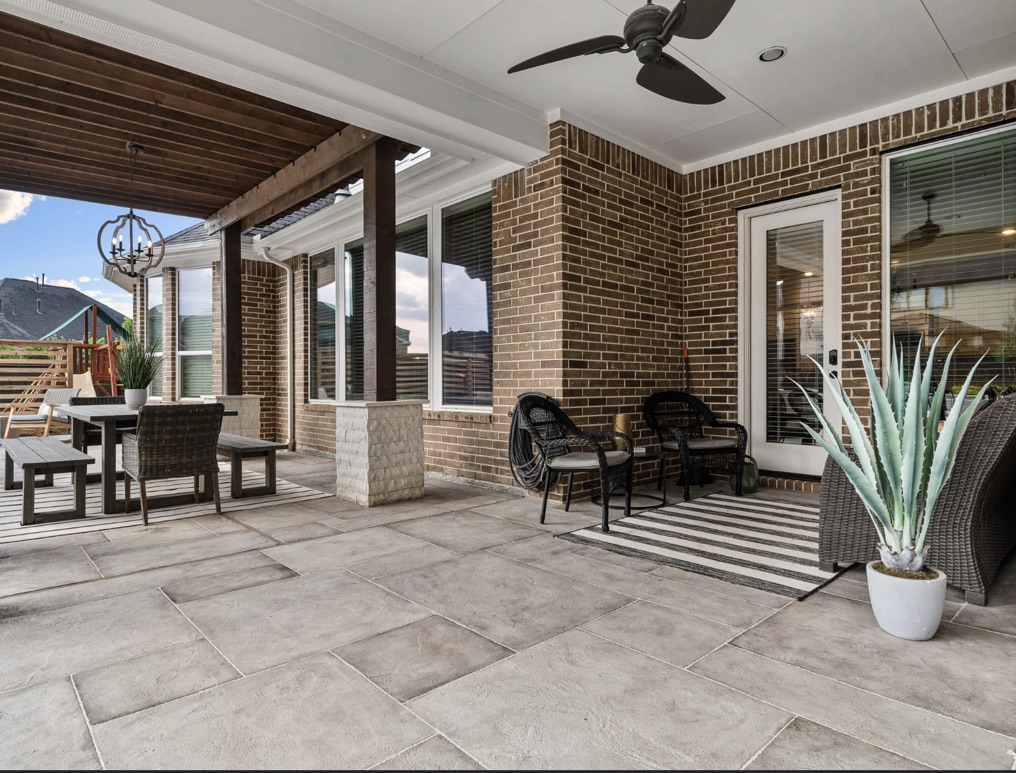
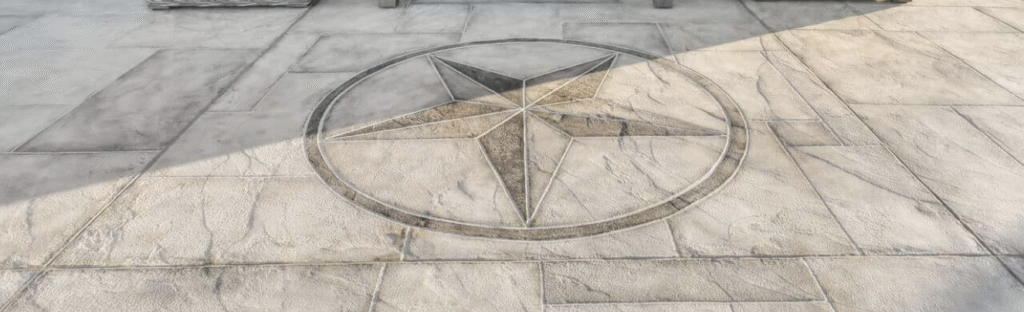
Hand-carved Roman pattern work in cool grey tones, giving this Katy backyard the look of natural stone without replacing the slab underneath.
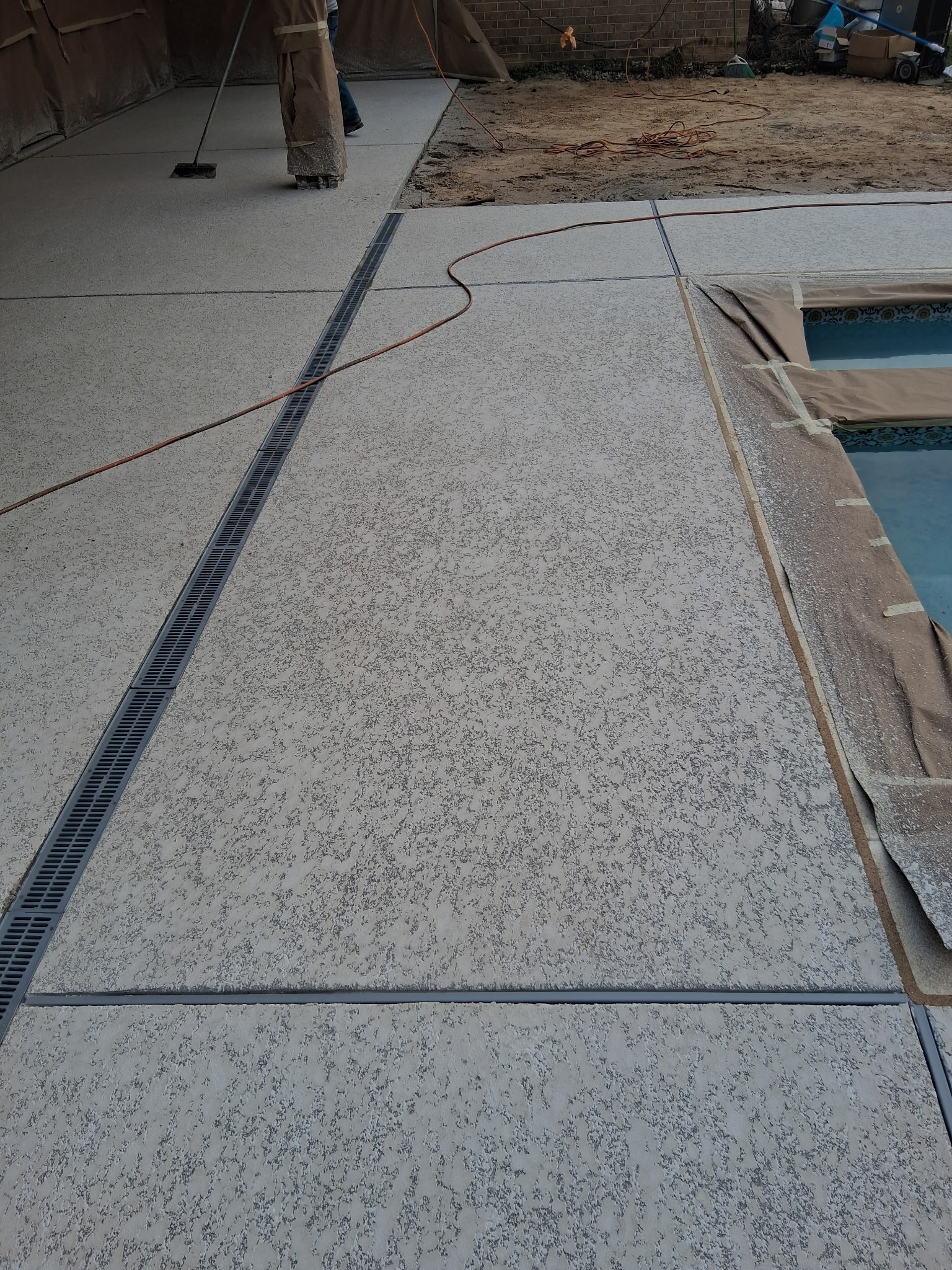
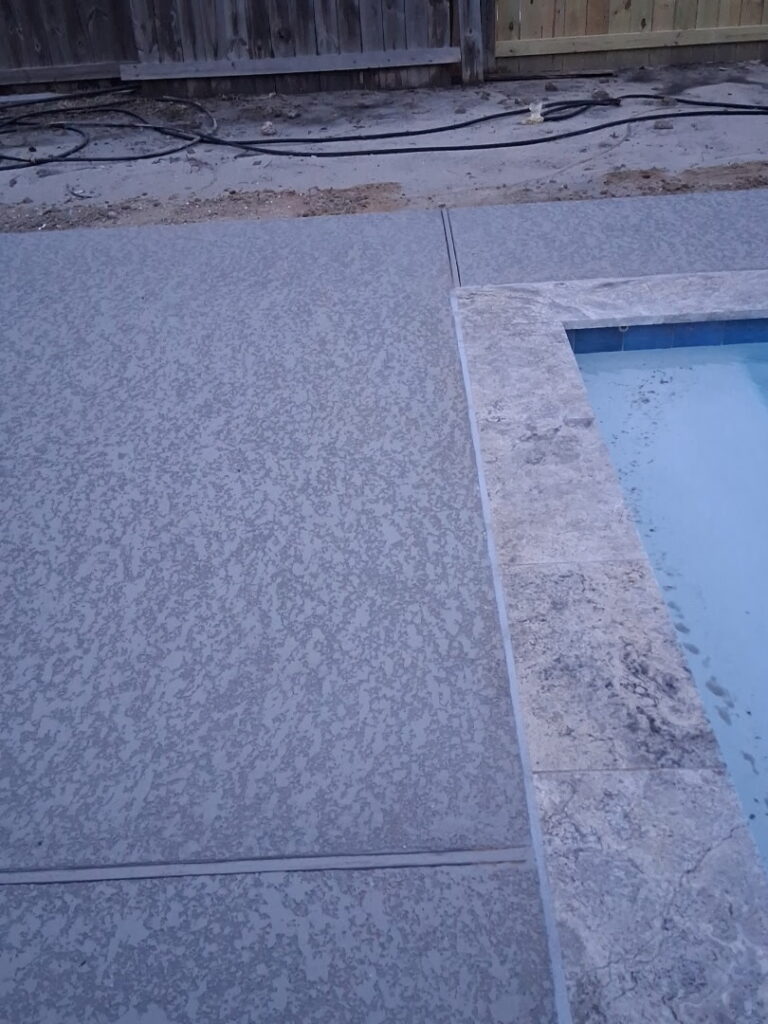
This spray deck finish stays cooler underfoot than bare concrete and adds slip resistance around the pool—both useful qualities during a Katy summer.
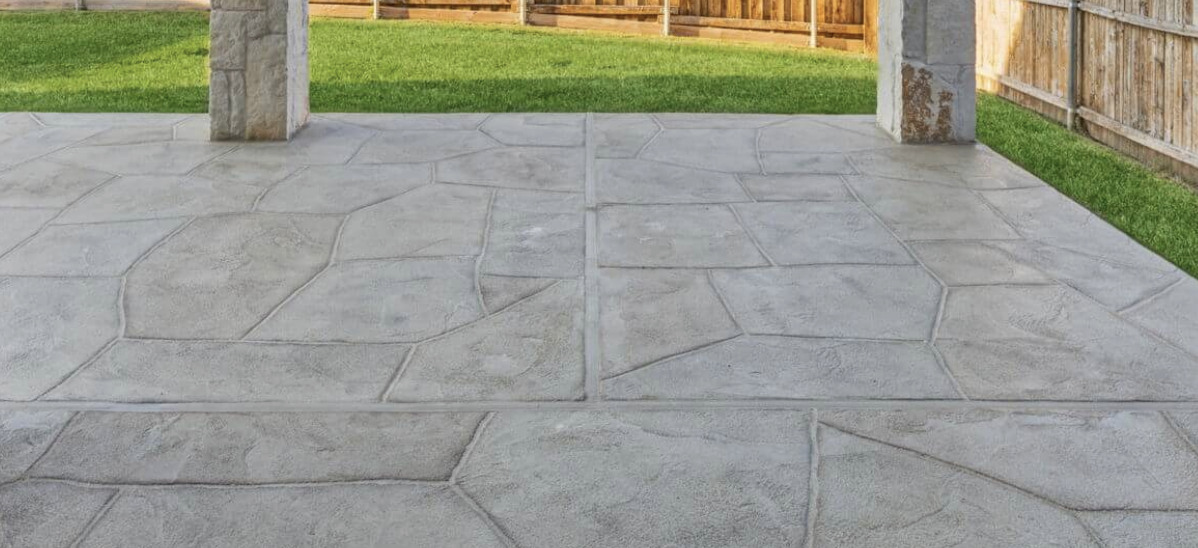
A hand-carved flagstone pattern turns what used to be a plain concrete walkway into something that reads as natural stone.
Why Choose Resurfacing Over Replacement?
Kool Deck for pool areas, Limecrete for a more textured look, or a tile-and-paver style overlay—whichever direction fits your property, it gets installed to hold up against Katy’s heat and humidity, not just look good on install day.
- Lower Cost: Skips the labor and material expense of a full demolition and repour.
- Faster Timeline: Most resurfacing jobs wrap in a few days, not the weeks a full tear-out demands.
- Built to Hold Up: Today’s overlay systems resist UV fading, temperature swings, and daily foot traffic.
- Less Waste: Reusing your existing slab means less demolition debris and a smaller environmental footprint for the project.
How We Resurface Concrete: Our 5-Step Process
We treat every resurfacing project in Katy as an actual upgrade to the property, not a quick cosmetic patch. That means the same attention to detail whether it’s a driveway, a patio, or a pool deck.
From diagnosing surface damage to matching the overlay to your home’s existing style, we handle the details so the process stays simple on your end.
Here’s what the five phases actually look like.
1. Surface Prep & Deep Cleaning: Contaminants, oils, and loose debris get stripped off the existing slab first, so the new overlay has a clean, stable surface to bond to.
2. Damage Assessment & Repair: We check the slab for cracks, spalling, or settling—issues that show up often given Katy’s clay soil—and repair them before any new material goes down.
3. Priming & Moisture Barrier: A bonding primer goes down next. It’s what keeps the overlay from delaminating later, especially given how humid it gets here.
4. Material Application & Detailing: The overlay pattern gets hand-applied and hand-carved, seam by seam, so texture and color transitions read as natural rather than mechanical.
5. Sealing & Curing: A weather-resistant sealer locks in the finish and gives it the UV and moisture resistance it needs to hold up outdoors here.
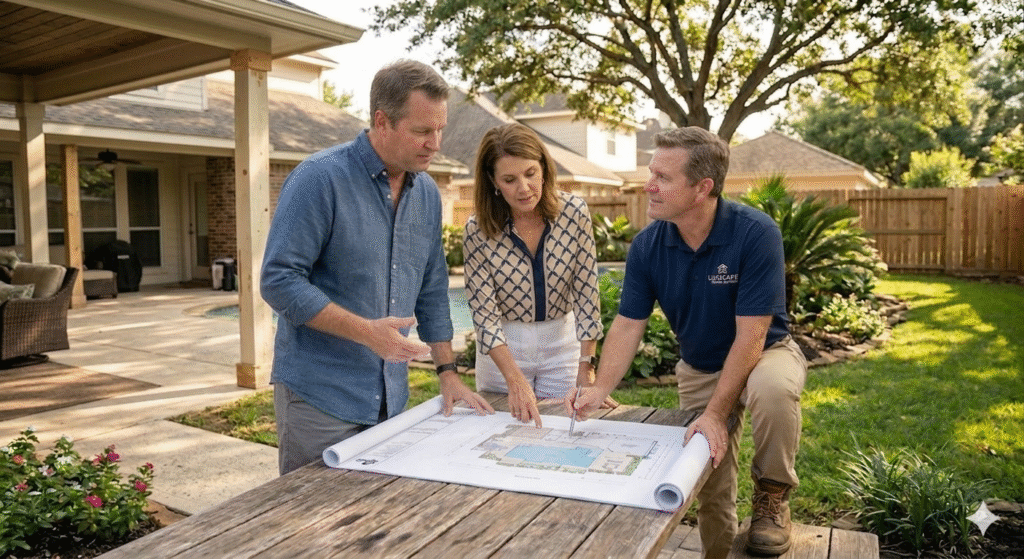
01 | On-Site Consultation
We don’t quote sight-unseen. Our team meets you at the property to look at the actual condition of your slab and talk through what you’re hoping to achieve with the finished surface.
We also take measurements and look at your home’s architectural style so the overlay ties in properly rather than looking like an add-on. That groundwork is what turns the next steps into an actual plan instead of a guess.
02 | Selecting Your Overlay
From there, we walk you through the overlay options—cool-touch pool deck coatings, hand-carved stone finishes, tile replications—and help narrow it down to a pattern and color that actually fits your home.
You’ll see samples and realistic previews of the finish before any work starts, so there’s no guessing what you’re going to end up with.
03 | Installation
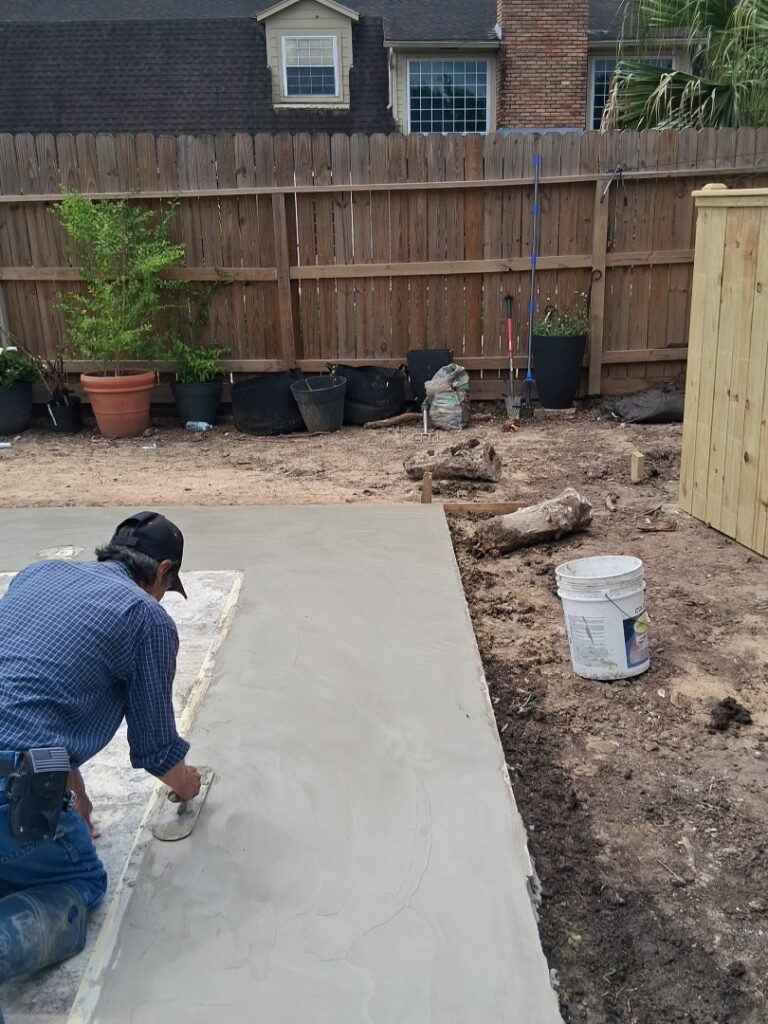
The same crew handles your project start to finish—prep through final sealing—not a rotating cast of day-labor subs. That consistency is what keeps quality the same from one Katy job to the next.
Most jobs wrap in a few days rather than the weeks a full replacement would take, so the disruption to your routine stays minimal.
04 | Quality Control & Walkthrough
Once the surface cures, we inspect it ourselves first—checking color consistency, texture, and sealing coverage against our own standard before you ever see it.
Then we walk it with you, answer whatever questions come up, and don’t call the job finished until it matches what you expected going in.
05 | Warranty & Long-Term Support
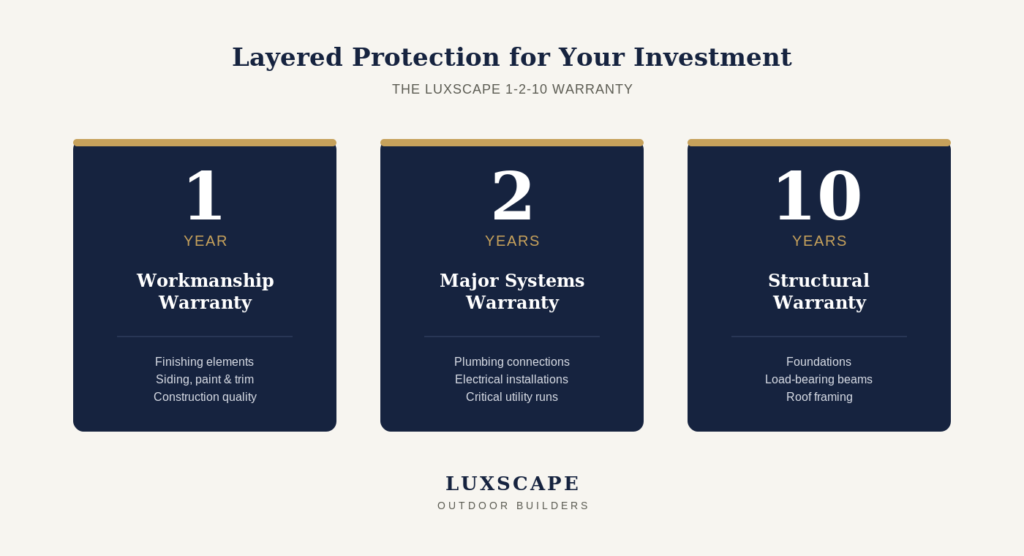
A resurfaced overlay is meant to last, and we back that up with a real warranty against premature delamination and material defects—not just a handshake promise once our crew packs up.
That warranty is possible because we’re using overlay systems and application methods that hold up long-term in the first place, not the cheapest option available. It’s the difference between a warranty that’s mostly for show and one you’d actually want to use.
Concrete Resurfacing FAQs
Can any concrete surface be resurfaced?
It works well on slabs that are structurally fine but cosmetically worn—surface cracking, staining, that kind of thing. If a slab has deep structural damage or is actually sinking (which does happen here given the clay soil), resurfacing isn’t the right fix, and replacement is the honest answer.
How long does the new surface last?
Maintained properly and resealed on schedule, a resurfaced area typically holds up 10-plus years, including through Katy’s heat and humidity.
Is the new surface slip-resistant?
Yes—we build in non-slip texture during application, particularly around pool decks and walkways where traction actually matters.
How much maintenance does a resurfaced concrete overlay require?
Less than you’d expect. The protective sealer we use creates a non-porous finish, so dirt, oils, and other fluids don’t soak into the material the way they would on bare concrete.
- Routine Cleaning: Sweep off loose debris and rinse periodically with a hose or a pressure washer on low. Dish soap or a mild biodegradable cleaner handles most stubborn spots.
- Skip Harsh Chemicals: Abrasive pads and strong chemical cleaners (ammonia-based or acidic) will wear down the protective topcoat faster than normal use would.
- Resealing: Plan on a professional reseal every 2 to 3 years to keep UV and moisture protection at full strength through Katy summers.